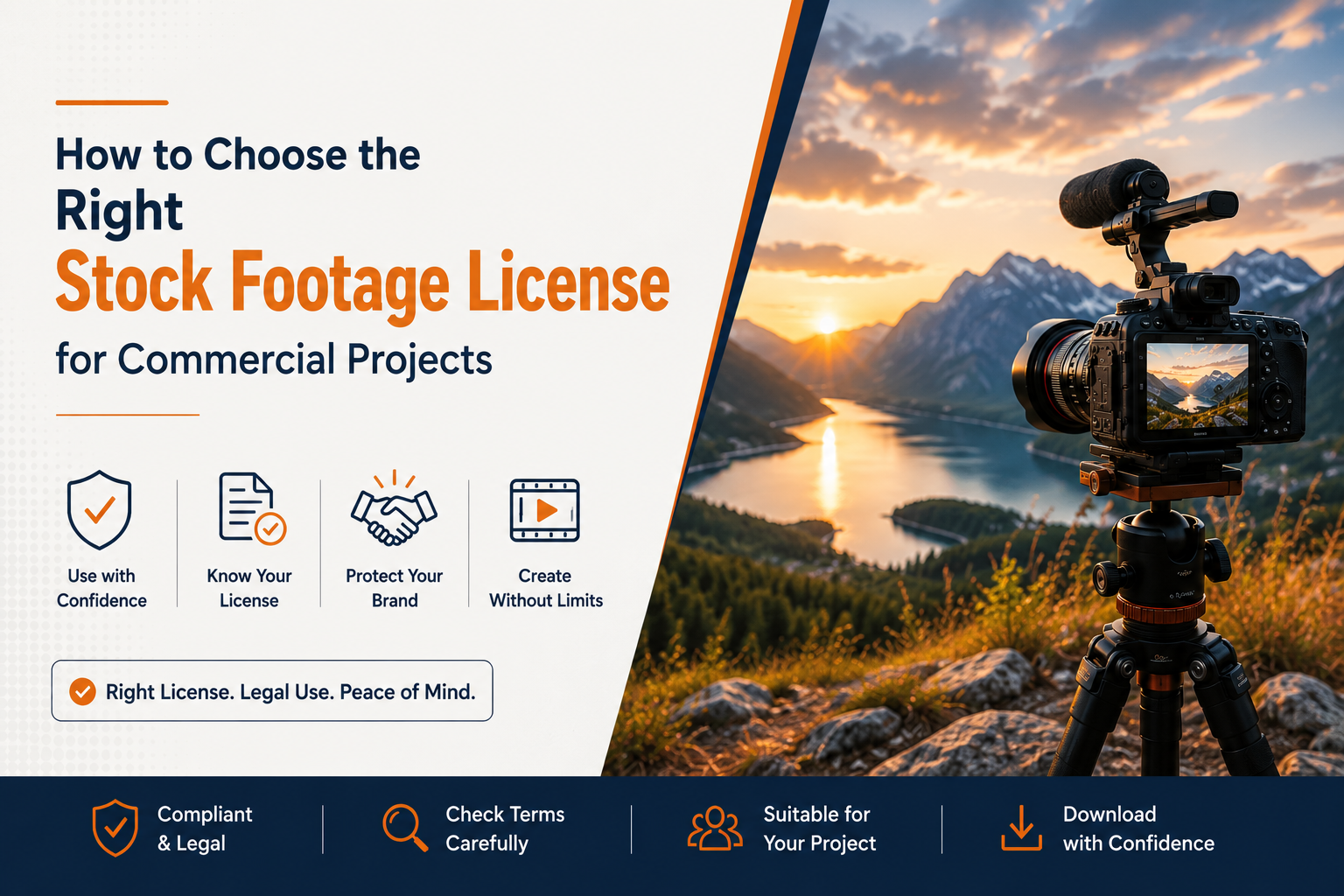
How to Choose the Right Stock Footage License for Commercial Projects
Choosing the right stock footage license is one of the most important decisions before using video in a commercial project. Whether you're producing an advertisement, YouTube video, documentary, corporate film, social media campaign, or client presentation, the license determines how legally you can use the footage.
Many creators focus only on visuals and price, but experienced marketers and filmmakers know that the license matters just as much. Selecting the wrong license can lead to copyright claims, unexpected costs, or restrictions on future use.
Why Stock Footage Licensing Matters
A stock footage license is a legal agreement between the buyer and the provider. It explains where, how, and for how long a video can be used.
Before downloading any clip, check:
• Commercial use permission
• Editorial-only restrictions
• Distribution limits
• Modification rights
• Attribution requirements
Common Types of Stock Footage Licenses
Commercial License
Best for advertisements, websites, business presentations, social media marketing, online courses, mobile apps, and branded content. It allows footage to be used in projects that generate revenue or promote a business.
Editorial License
Editorial footage is intended for news, documentaries, education, and factual reporting. It should not be used to advertise products or services because recognizable people, logos, or trademarks may not have commercial releases.
Royalty-Free License
Royalty-free does not mean free. You pay once and can usually reuse the footage according to the license terms without paying additional royalties.
Rights-Managed License
This license is more restrictive. Pricing depends on where, when, and how the footage will be used. It is often chosen for exclusive campaigns.
How to Choose the Right License
Start by answering these questions:
1. Is the project commercial or editorial?
2. Will the video promote a business?
3. Will clients reuse the footage?
4. Will the video appear on multiple platforms?
5. Is worldwide usage required?
Your answers usually make the correct license obvious.
Mistakes to Avoid
• Assuming every stock video includes commercial rights.
• Ignoring editorial restrictions.
• Downloading from unreliable sources.
• Not keeping proof of purchase.
• Forgetting to read the license agreement.
Choosing a Reliable Stock Footage Provider
A trustworthy library should provide:
• Clear licensing information
• Commercial-ready collections
• High-quality 4K and HD footage
• Transparent pricing
• Instant downloads
• Responsive customer support
Internal Resources
If you're looking for Indian visuals, explore:
• Monument Stock Footage
• Delhi Stock Footage
• Aerial Stock Footage
• Festival Stock Footage
• Free Stock Videos
These category pages help you find clips faster while maintaining consistent licensing across projects.
Frequently Asked Questions
Q. Can I use commercial stock footage on YouTube?
Yes, if the license allows commercial use.
Q. Can editorial footage be used in advertisements?
No. Editorial footage is generally limited to news and factual content.
Q. What does royalty-free really mean?
It usually means you pay once and use the footage under the provider's license without ongoing royalty payments.
Final Thoughts
Choosing the right stock footage license protects your investment and gives you confidence to publish commercial work without legal surprises. Always read the license before downloading, buy from trusted providers, and keep a copy of your purchase records.
For businesses, agencies, and creators, understanding licensing is just as valuable as choosing the perfect shot. A few minutes spent reviewing license terms can save significant time, money, and legal issues later.